
| Funding Agencies | THE SCIENTIFIC AND TECHNOLOGICAL RESEARCH COUNCIL OF TURKEY (TÜBİTAK) & FRENCH MINISTRY OF FOREIGN AFFAIRS |
| Program | Program Bosphore 2026 |
| ID/Acronym | 225N134 / LaSiSTAnS |
| Grant Period | April 2026 – April 2028 |
| Principal Investigator | Dr. Mehmet İsmet Can Dede |
| Project Partners |
|
| Project Researchers and Consultants |
|
Aim:
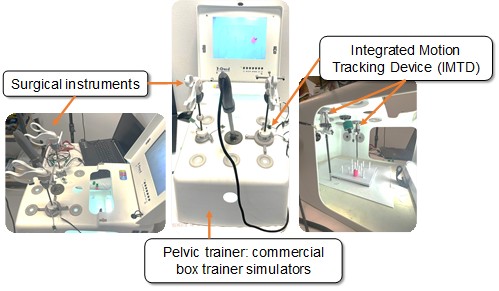
This project aims to develop a training system for laparoscopic surgical gestures. This system will enable real-time tracking of both instrument motion and the learner’s actions, while improving the learning curve through personalized scenarios and gesture correction. To achieve this, the two partner teams will combine their respective expertise: one in surgical simulators and mechanism synthesis (the French partner), and the other in mechanism design and MRF-based brakes (the Turkish partner).
Short Summary of the Topic:
Learning surgical gestures before immersion in the operating room is an obvious necessity. Moreover, optimizing the acquisition of technical skills could significantly improve the learning curve. Surgical simulation is based on a combination of practical workshops and increasingly complex surgical techniques, requiring specific and targeted training. Currently, methods such as simulator training or training on fresh cadavers do not provide adequate feedback on the surgical gestures or the learning process. Even the cadaveric model, though more realistic, has limitations. It does not generate objective data for quantitative assessment or long-term monitoring of the learner. Evaluation is usually performed in real time by an instructor who must be physically present.
The recent development of new technologies in medicine, such as virtual reality, opens new perspectives for surgical training through advanced interfaces. Classical surgical training today faces both medico-legal challenges and technical constraints: training learners on increasingly complex procedures within limited timeframes.
Currently, laparoscopic surgical training simulators can be classified into physical simulators, hybrid simulators, virtual reality simulators, and animal or cadaver models. Physical box trainers using real instruments with direct visual feedback are widely used due to their affordability. Their effectiveness is well correlated with intraoperative performance. However, they lack objective performance assessment tools. Hybrid simulators, which combine real instruments with virtual environments, enable task tracking and performance monitoring based on instrument motion. Virtual reality simulators offer graphic environments with or without physical tools and allow for various scenarios, some including haptic feedback.
Many studies suggest that combining multiple simulation methods is more effective than using a single one. However, the lack of haptic feedback and overly stylized graphics are major drawbacks of hybrid and VR simulators. The absence of force perception may lead to improper movements that could endanger patients, while excessive graphical elements may create a “video game” effect that disrupts the learning process for newer generations.
It is therefore essential to develop new training systems that faithfully replicate the use of real surgical instruments and provide realistic force feedback. Such systems should also support continuous, quantitative assessment of learner performance and offer adaptive, progressive training scenarios that closely mirror real surgical environments, as well as provide active and personalized assistance during the execution of exercises through guidance or blocking actions in order to mimic real operation conditions and accelerate residents’ learning curve.
Organizational Approach and the main structure of the Method:
The first phase of the project will focus on in-depth analysis of surgical gestures and the identification of target tasks within a family of training scenarios. Experimental protocols for motion analysis will be designed in close collaboration with expert surgeons. Kinematic, force, and performance characteristics of surgical gestures will be identified using motion capture systems and force sensors. A pre-existing database from prior work will be revisited and enriched based on newly defined objectives and parameters.
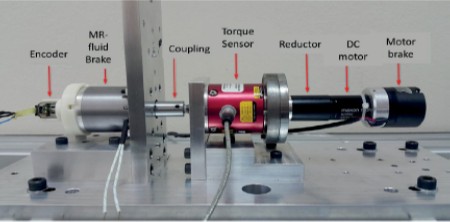
The second phase will involve the design and development of tracking and assistance devices based on biomimicry approaches, biomechanical modeling, and the integration of novel actuation technologies, such as the MRF-based brakes, developed by the Turkish partner. The suitable kinematic architecture will be defined and optimized to enable the movement and positioning of medical instruments. Medical partners will be involved along all the project phases to ensure the proposed systems meet ergonomic and usability requirements. Finally, the optimized architecture will feed into an instrumentation and prototyping phase using the developed MRF-based brakes, leading to a compact and efficient training solution
On how to contribute to the goals and targets of the call program with the expected targets and outcomes of the project:
Pprime team has been developing RCM mechanisms for surgical procedures. These include surgical systems and surgical trainers. The surgical trainers are for educational purposes and call for subsystems displaying constraint forces to the user when the surgeon reaches the set boundaries. Through this collaboration, Pprime will be able to integrate a custom-designed mechanism with MRF-based brakes in its current surgery simulator system.
IzTech team has developed several MRF-based brakes for haptic systems. In their latest study, they developed a hybrid actuation system including a DC motor to cancel the adverse effects of the MRF-based brake, such as the off-state torque. Through this collaboration, the IzTech team aims to develop an MRF-based brake that has minimal off-state torque without using an additional DC motor. This enhancement will minimize the size of such actuation systems to find more applications.
The common added value is the development of a surgical training system that can provide an improved experience for the surgeons. In this way, the acceptance of such tools for surgeon education will be improved.
Another outcome of this collaboration will be the formation of new research routes and proposals on the international level.